1. Tell me about yourself.
I’m a software engineer that is frontend leaning, but have experience working across the full stack. I have experience with TypeScript, React, AWS and I enjoy building well-structured, high performance systems that improve developer experience and deliver business outcomes. My recent job at Pfida I worked as a team of 8 engineers, and I was an engineer that was solely responsible for frontend and that includes architecture and making decisions about the stack etc. My recent work includes implementing multi-tenancy, building design system for the company, implementing backed-for-frontend pattern to streamline development, and fixing critical issues in the customer facing application. My focus is to always find ways to optimise processes, mentor peers and drive technical improvements that make a real impact for the business.
2. Walk me through your resume
Current/Most Recent Role – Software Engineer at Pfida (Aug 2023 – Feb 2025)
“In my most recent role, I took full ownership of frontend technology decisions, led Agile feature delivery, and implemented solutions that improved both developer efficiency and user experience. A notable project was migrating a problematic finance application from Vue.js to React using microfrontends, which reduced support tickets by 78%. I also introduced a multi-tenancy architecture, enabling white-labeling and dynamic theming, unlocking a new revenue stream for the business. Additionally, I improved collaboration between frontend and backend teams by introducing contract-driven development with auto-generated mock APIs, streamlining parallel development.”
Previous Role – Associate Developer at ANS Group (Feb 2022 – July 2023)
“Before that, I worked at ANS Group, where I focused on delivering high-quality React and React Native applications. I collaborated on a cross-platform design system, which reduced design-to-development time by 40%, and implemented performance optimisations that improved responsiveness by 25%.”
Earlier Experience – Ecommerce Specialist at MMG Trading Ltd (Mar 2017 – Feb 2022)
“Earlier in my career, I worked as an ecommerce specialist and initially, My core responsibility was managing the content on all marketplaces such as Magento, eBay, Amazon. However, the process was inefficient so I built solutions that reduced errors by 80% and increased monthly product listings by 40%, demonstrating my ability to drive efficiency through automation and tooling. Probably the most challenging things I had to build was translation of titles and bullet points and that was built with Excel.”
Education
I studies English Studies and I have both a Bachelor’s and a master’s degree, which are not relevant to the industry directly, however it helped me to develop the soft skills I need for my job.
Technical Skills
”My core stack includes TypeScript, React, Next.js, Node.js, and AWS, along with tools like Storybook, Jest, Vitest, Playwright, and Terraform. I specialise in frontend, but I am comfortable working across the stack”
Closing Thought
Overall, I enjoy working in environments where I can contribute strategically and technically, where I can have an impact on development velocity, the user, and where people care about good engineering culture. Also, most importantly, I would want to ensure that whatever I do, has a positive impact on the bussiness and I help achieving the milestones of the business.
3. Why do you want to work here?
“I am seeking a company with a clear vision and strategic direction. Your organization’s commitment to innovation and structured growth aligns with my professional goals. I am particularly impressed by your recent initiatives in [specific project or area], and I believe my experience in leading technical projects and improving development processes can contribute significantly to your team.”
4. What are your strengths?
- adaptability and quick learning
- practive ownership
I think my key strength is the adaptability and quick learning. When I had to adjust an application, that wasn’t built with multi-tenancy in mind, I had no idea how to implement this but I still decided to take that challenge. I had a short period of time to do a research how other businesses achieve this, tooling, what it actually involve, gather the requirements of what we need etc. I quickly learned it, designed the solution and implemented it. It helped to meet the deadline and open a new revenue stream for the business. I am also proactive in ownership which I did when I identified issues with the customer facing application that had to be taken care of. I designed, communicated and delivered the solution that helped us fix those issues.
5. What are your weaknesses?
I tend to hyper-focus, a trait to my ADHD, which means I can go deep into a problem and I sometimes lose track of time. I’ve noticed that this can lead me to spend a bit longer trying to perfect details or going into a rabbit hole. To manage this, I set clear requirements and deadlines, and I block time slots in my calendar to ensure I stay on track. I also use pomodoro technique to ensure that I am aware of time (another thing that people with ADHD sometimes struggle). It keeps my focus in check but lets me harness deep concentration to catch issues other might miss. In a way, I’ve managed to turn a weakness into my superpower which helps me drive high quality work.
6. Where do you see yourself in five years?
“In five years, I aim to be a Staff Engineer, leading projects and mentoring junior developers. I want to continue advancing my skills in full-stack development, with a focus on frontend development, taking on more responsibilities, and contributing to impactful projects that drive business success. My goal is to be a key technical leader in a company with a clear strategic vision and a commitment to continuous improvement.”
7. Why did you leave your previous job?
I learned a lot at Pfida and did some good stuff, such as AWS, how to structure infrastructure so it’s flexible to manager but also meets the compliance requirements, I had some exposure to event driven development and was able to have more direct impact on the product and learn soft skills while collaborating with stakeholders such as heads of departments and execs. But as the time went on, I started to feel like there wasn’t much room for me to move up. Also, after awhile decisions were not being made by higher ups which led to not having much work to do on a plate. Some principle and senior engineers were made redundant, replaced with contractors as well which gave me a bit less confidence in what is happening in the company. I felt that it was a time for me to move on, give myself some space and look for a right opportunity. I also saw a benefit in being available immediately for a right role.
I am looking for a more stable long term position with better prospects. I want to join a company with a clear direction where I can grow as an engineer, somewhere a bit more established, with good engineering culture, and somewhere I can build my career as an engineer, and I can see myself being in for a few yers.
8. What can you bring to the company?
I bring a unique blend of technical expertise, strategic problem-solving, and a passion for delivering exceptional user experiences. My proficiency with [insert stack: TypeScript, React, AWS, etc.] means I can hit the ground running and contribute immediately.
I’ve led projects that transformed legacy systems—turning buggy, non-compliant code into scalable solutions and cutting support tickets by 78%—and architected white-label applications that unlocked new revenue streams. I’m also adept at bridging the gap between backend and frontend teams through contract-driven development, ensuring that while teams work independently, they communicate effectively. Within a year, I have learnt quite a lot, which shows that I am dedicated and I am a driven person.
On top of that, I love mentoring developers and find it incredibly rewarding to see colleagues grow through shared knowledge. In short, I offer technical excellence, innovative problem-solving, and a collaborative spirit that will drive both product and team success.
9. What is your greatest achievement?
Career
It probably will be improving the problematic finance application that was not only buggy and was not meeting finance compliance, but was also constant source of support headaches. It helped the business to achieve full complience with financial regulations, reduced support tickets and allowed us to expand development capacity as backend developers were more comfortable to contribute as they were familiar with React, and we were able to hire more devs. It was also a rewarding challenge for me as I was able to turn a crisis into an opportunity to show what I am capable of.
Non-career
On the personal side, one of my proudest moments was when I got to DJ at one of Berlin’s most legendary clubs called Tresor. That experience was absolutely surreal and remains a highlight of my career as a DJ. For me, it is just a reminder that everything is possible, even if it feels like it isn’t. We just need to work for it and it will happen.
10. How do you handle stress and pressure?
“I handle stress and pressure by staying organised, prioritising tasks, and maintaining a focus on the end goals. I also believe in the importance of work-life balance and taking breaks to recharge. During high-pressure situations, I rely on clear communication and teamwork to ensure we meet deadlines without compromising quality.”
12. Where does the drive comes from?
Career
My drive comes from the enjoyment on working on solving complex problems that make a difference. technology is like a puzzle, wher eeach piece I place not only helps businesses achieve their goals, but improve people’s lives, whether it is helping achieving their goals or improving their lifes. I often see software that is build without a clear purpose/requirements which leads to users being frustrated and businesses strugling. I love working on these challenges and I want to help businesses to drive their success but also make people’s life easier with technology.
Non-career
My drive comes from a wanting to build a secure future, nost just in my career but in life as a whole. I love what I do for a living, I also value my personal growth and experiences that life has to offer. I love traveling and exploring new cultures as it opens your mind and gives you different perspectives. Working as an engineer enables this for me, as it allows me to save money for the future when I will retire in 25+ years without having to compromise on things that I enjoy doing.
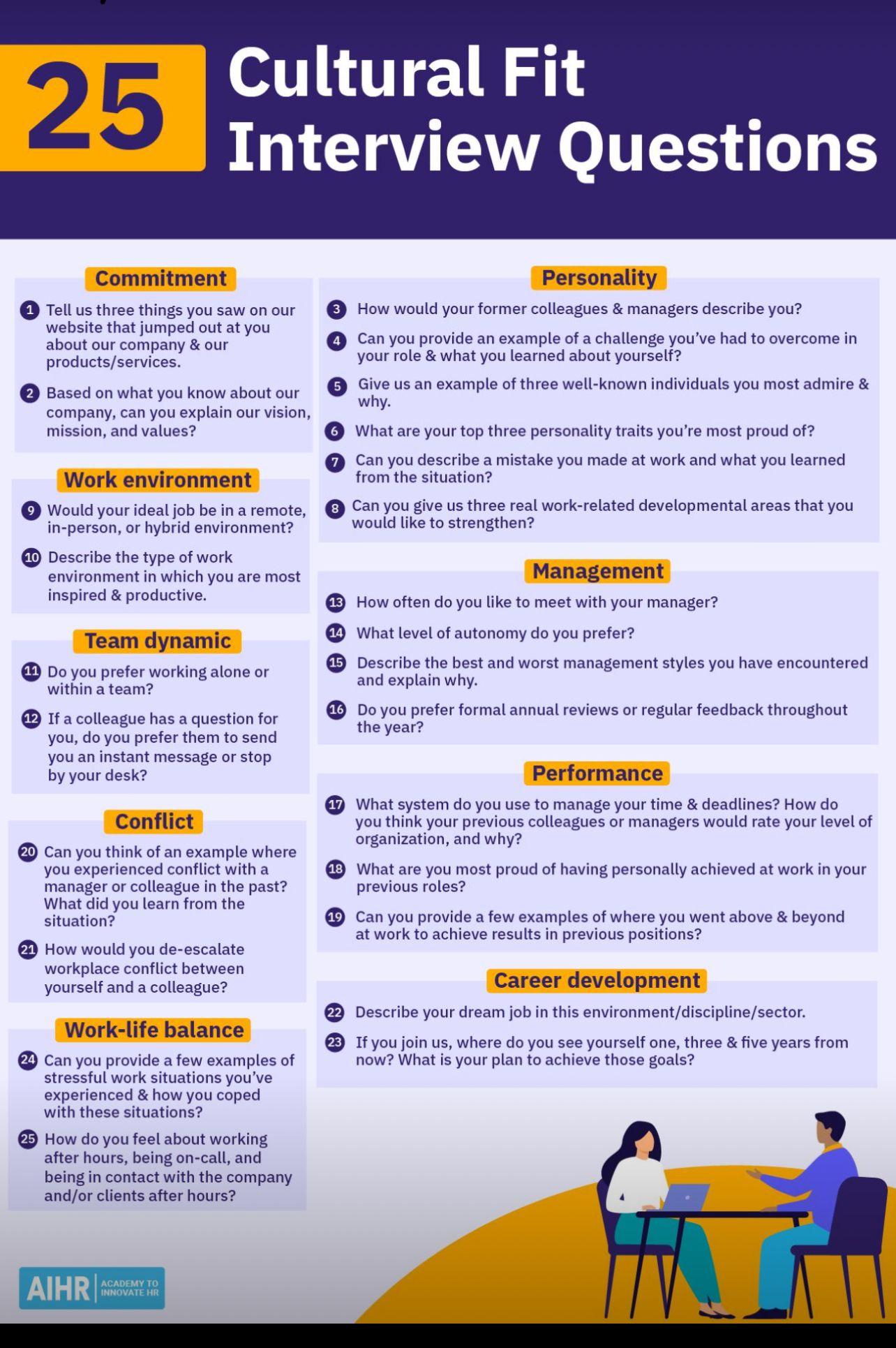
Commitment
Tell us three things you saw on our website that jumped out at you about our company & our products/services
Based on what you know about our company, can you explain our vision, mission and values?
- You want to provide accessible payment solutions
Work Environment
Would your ideal job be in a remote, in person or hybrid environment
I don’t mind any of those. I think all of them have its own advantages and disadvantages. It all depends on the team dynamics and tools that are available for the team. For me, the culture I work in is the most important aspect.
Describe the type of work environment in which you are most inspired & productive
- I like environments where days are not filled in with meetings and there’s dedicated time to focus on work
- Depends on the type of work, but I like to collaborate with others and mob with them, because that way I can learn new things, we can challenge each other and also, we do not have to spend lots of time on reviewing code afterwards
- I like working in an environment where people are open to suggestions and are willing to try new things, if they are going to make team’s life easier
Team Dynamic
Do you prefer working alone or within a team
It depends on the type of work I have to do. Collaboration is important so when brainstorming a new feature or something needs to be done relatively quickly, and it doesn’t require deep focus, then I like working with others, because you can unblock each other fairly quickly. If work requires deep focus, I sometimes need to do some work alone.
If a colleague has a question for you, do you prefer them to send you an instant message or stop by your desk?
I don’t mind either. In general, I book some focus time in a calendar every day just to let people know that I am not available for meetings at that time, and I usually avoid responding to messages very often during that time unless it is urgent. This has been allowing me to get my core work done without distractions while I am the most productive. If someone approached me at that time and it wasn’t urgent, I would get back to them as soon as possible once I am done with my core work.
Conflict
Can you think of an example where you experienced conflict with a manager or colleague in the past? What did you learn from the situation?
Situation
Our team was tasked with developing a complex web application. Given the project’s scale and the intricate business logic involved, I proposed adopting TypeScript. I highlighted TypeScript’s benefits, such as static typing, which helps catch errors early during development, improved tooling, and better code maintainability. However, the team had been using JavaScript for years, and many felt that introducing TypeScript would slow down our development process and create additional training needs.
Conflict
The conflict escalated when a few critical bugs made it to production. These bugs were related to type mismatches and could have been avoided with type checking. Despite this, some team members remained skeptical, and the manager was concerned about the potential delay in project timelines due to the learning curve associated with TypeScript.
Resolution
I decided to address the situation by:
- Prototyping a Module in TypeScript: I took the initiative to rewrite one of our existing JavaScript modules in TypeScript. This module was a small, self-contained part of our codebase. I demonstrated how TypeScript caught type-related errors that were previously unnoticed in the JavaScript version.
- Organising a Knowledge-Sharing Session: I conducted a workshop to introduce the team to TypeScript, showcasing its benefits and addressing their concerns. I provided examples of how TypeScript could simplify our codebase and enhance productivity in the long run.
- Proposing a Gradual Adoption Plan: To alleviate fears of a sudden transition, I suggested a phased approach. We would start by using TypeScript for new modules while gradually refactoring existing ones. This plan included regular check-ins to assess progress and address any issues.
Outcome
The manager and my colleagues appreciated the proactive steps I took. By seeing TypeScript in action and understanding its long-term benefits, they became more open to the idea. We agreed on a gradual adoption plan, and as we incorporated TypeScript into our workflow, the team started noticing fewer runtime errors and better code quality. This transition not only improved our project’s stability but also fostered a culture of continuous learning and adaptation.
Learnings
From this experience, I learned several valuable lessons:
- Effective Communication: Presenting a well-researched case with practical demonstrations can help overcome resistance to change.
- Empathy and Patience: Understanding and addressing the concerns of colleagues is crucial for driving consensus.
- Incremental Changes: Proposing a gradual approach to adopting new technologies can mitigate fears and facilitate smoother transitions.
How would you de-escalate workplace conflict between yourself and a colleage?
- I would do it privately between him/her and myself
- I would listen to what the issue is from that person’s point of view
- I would express my perspective in a calm way
- I would suggest finding what we both want to achieve and I would brainstorm some ideas collaboratively and agreed on a plan
- If the above would be impossible and that was not the first time, I would seek mediation from my manager or HR as they should be neutral and have different perspective
- I would also reflect on the situation to understand what caused it and how to potentially avoid it in the future
Personality
How would your former colleagues & managers describe you?
Dedicated, collaborative, and solution-oriented team member.
Dedicated
- hard quality work
- strong work ethic and making sure that I can deliver what I need to deliver on time
Collaborative
- ability to share the knowledge and support others
- I believe it creates positive and productive environment
Solution oriented
- I like to approach challenges methodically and breaking them down into manageable pieces and developing strategic solutions.
Can you provide an example of a challenge you’ve had to overcome in your role & what you learned about yourself?
When I started as a developer, I wanted to do everything perfectly. I soon learned that in environment with tight deadlines where every minute costs money, there’s no room for perfection and unfortunately, I was a perfectionist (I still am to some extend, but I just let it go sometimes). I’ve learnt that sometimes things can get messy and they can be imperfect.
What are your top 3 personalities
- Empathy
- One of my top personality traits is empathy. This trait allows me to understand and share the feelings of others, which is crucial in a team-oriented environment. Empathy helps me to build strong relationships with my colleagues, fostering a collaborative and supportive work atmosphere.
- Attention to detail
- Another key personality trait is my attention to detail. In software development, precision is critical to avoid bugs and ensure the smooth functioning of applications. I have a meticulous approach to my work, whether it’s writing code, conducting code reviews, or performing tests.
- Adaptability
- Adaptability is another important trait that I bring to the table. The tech industry is constantly evolving, and being able to quickly adapt to new tools, technologies, and methodologies is essential. I embrace change and am always eager to learn new skills to stay current with industry trends.
Can you give us three work-related dev areas that you would like to strengthen
Describe the best and worst management styles
-
Best was when my manager had regular meetings with me when he could give me feedback and I could provide him with one as well, discuss concerns etc
-
The worst was when my manager did not have time for the team members to have one 2 ones with them, there was no development plan. I believe that management is about making sure that people that I manage get everything they need to be the best of themselves.
Examples of My Career Where I Have Used TDD
- Backend Development: At Pfida I have consistently been using TDD when implementing new features on the backend, including endpoints, database logic etc. TDD ensured that each part of the feature was functioning correctly with mocks and to ensure we cover error handling, happy path and so on.
I also focused on testing the entire functionality in context (e.g. instead of testing utilities, they are tested as part of a test for, for example, lambda function) rather than isolated tests. This approach helps to ensure that this particular function works in a context of where it is used, and that coverage is covered within that context. At this stage, the business requirements or acceptance criteria aren’t tested. - Business Requirements Testing: To validate business requirements, I use ephemeral environments and component-level end-to-end (E2E) tests. These tests ensured that the feature worked as a whole, meeting both functional and business expectations.
- Frontend Development: For the frontend, I have always been applying TDD while developing React hooks and utility functions. When it comes to the UI, my approach is focused on writing integration tests that simulate how users would interact with the UI. While TDD can be challenging with UI tests (due to the complexity of interacting with the DOM), it is certainly possible when you understand the quirks of the UI library in use. However, I emphasise writing tests from the user interaction perspective.
Examples of My Career Where I Have Improved Existing Codebases from a Design and Architecture Point of View
In my current role, I was tasked with working on an application that had significant design flaws:
- Data was only fetched on initial load, and users had to log out and log in to fetch new data.
- Data and tokens were not encrypted and stored in a localStorage, presenting security risks.
- Components were tightly coupled with asynchronous state which made it difficult to decouple, reuse and test.
- The app was built on outdated dependencies (Vue 2.0), which had reached end-of-life.
- There was no typesafety or tests for core utilities and functionality.
Despite these challenges, the business needed to continue adding new features while we addressed the technical debt.
To tackle this, I decided to migrate the app from Vue 2.0 to React and Typescript, aligning it with other frontend applications. I chose microfrontends using single-spa as the solution, which allowed us to run both Vue and React frameworks together. React was used as the host, while the Vue app acted as a child application that was mounted or unmounted based on the route path. The idea was to use a strangling fig pattern that allows for incremental migration of legacy system by gradually replacing specific pieces of functionality with updated and new services and strangling the old system and decommissioning it.
In terms of architecture, applications where deployed to two different buckets and were served from separate cloudfront distributions. Then, the Microfrontend app (vue), was loaded in using cloudfront distribution URL to download the app and mount it in within host app (react).
During the refactor, I first wrote E2E tests for every feature we planned to rewrite at that particular time. This ensured that the user journey remained intact and that we didn’t introduce new bugs. The tests also provided us with a foundation for ensuring quality as we worked on the new codebase.
This project took almost a year, but it greatly improved the user experience, developer experience, teams productivity and fixed security risks. The new react based application allowed for faster iteration and thanks to the fact that we we created everything to promote composibility, it allowed us to test our UI using integrated tests rather costly and slow E2E tests. Also, at the end of the re-write, we removed microfrontends and deployed just like a normal Single Page App.
Asking if the offer is negotiable
Thank you so much for the offer and I am looking forward to start working with you. Is this offer negotiable?